 |
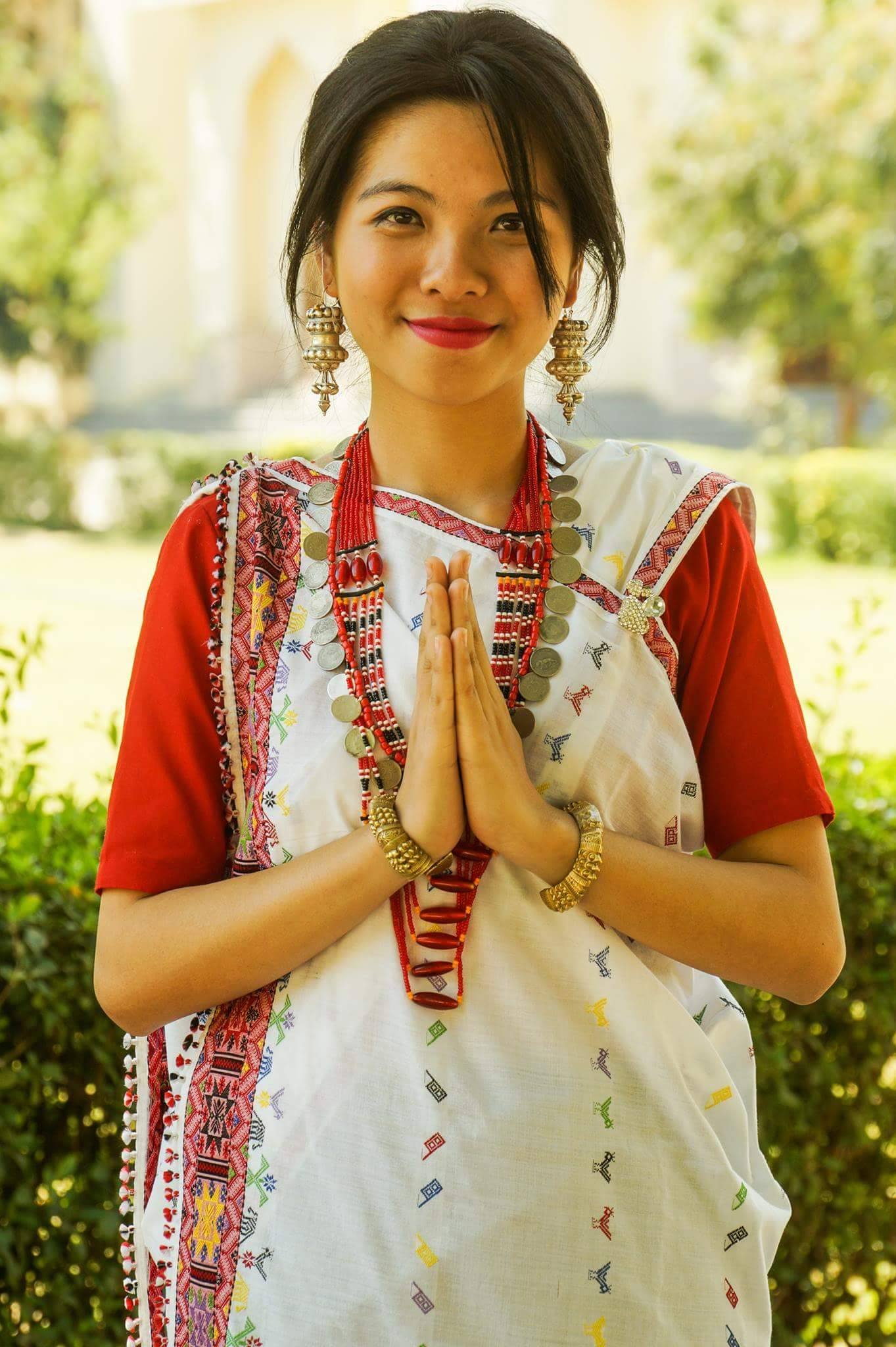
| A beautiful Karbi girl attire their traditional dress and ornaments. |
Anglong district of Assam and have their own traditional dresses, ornaments,
dances, music, and folk songs. The cloth they wear is homemade from locally grown cotton or eri silk. Even though agriculture is the primary
occupation, the handloom industry is very much common to all Karbi families.
Rearing the Eri silkworm, spinning and weaving are not only common
practices among them, but these are inseparable parts of their culture.
Therefore women without the knowledge of spinning and weaving are
unthinkable in the Karbi society. The Karbi people can be easily recognized by
their traditional dresses and the ornaments which are artistically designed and
inherited from their forefathers. The Karbi costumes more or less are similar
to those of the Khasis.
(adsbygoogle = window.adsbygoogle || []).push({});
Trandionallly, Karbi folk artisans hand-crafted pieces of jewelry of
brass, silver, and gold depicting simple cultural patterns and symbols in the
varieties of Roi (bangle), Nothengpi (earring), Lek (necklace), and other such
ornaments which are briefly discussed below.
 |
| Roi (bangle) |
Roi is a bangle made of brass, silver, or gold which are worn
by both males and females. It comes from various designs and names, giving the
wearer a distinctive style. Roi has a range of designs that include- Roi
pengkhara, Ingki amek aroi and Pinso.
Arnan is a ring. It is also a piece of popular jewelry crafted out of
brass, silver, and gold with coins.
 |
| Lek hiki (necklace) |
(adsbygoogle = window.adsbygoogle || []).push({});
Lek hiki or necklace made of brass, silver, or gold, the varieties
worn by both males and females are Lek ruve, Lek tangka.
 |
| An elder Karbi woman wore Nothengpi earrings. |
Nothengpi, literally ear-wood, is worn by elderly Karbi
women who take pride in stretching the holes of the ear lobes to fit the
circumference of a regular-sized bamboo tube which was a high fashion in older
days. Giving an account of Nothengpi, A characteristic ornament is a large
silver tube inserted into the lobe of the ear which is much distended thereby;
this is called Kadengchinro and weighs three/four rupees.
(adsbygoogle = window.adsbygoogle || []).push({});
Conclusion
Here we have collected Karbi traditional ornaments and jewelry name with images. If you liked this post then do share it with your friends, and family so that people can get inspired too. I hope it will help you, Please let me know if I had any mistakes in this post. Your suggestions are more important to me. Contact me.
{
“@context”: “https://schema.org”,
“@type”: “Article”,
“mainEntityOfPage”: {
“@type”: “WebPage”,
“@id”: “https://dimasathairili.blogspot.com/2022/09/karbi-traditional-ornaments.html”
},
“headline”: “About Karbi Traditional Ornaments & Jewelry Name with Images”,
“description”: “The Karbi is the major tribal ethnic group of the Karbi Anglong district of Assam and have their own traditional dresses, ornaments, dances, music, and folk songs. The cloth they wear is homemade from locally grown cotton or eri silk. Even though agriculture is the primary occupation, the handloom industry is very much common to all Karbi families. Rearing the Eri silkworm, spinning and weaving are not only common practices among them, but these are inseparable parts of their culture. Therefore women without the knowledge of spinning and weaving are unthinkable in the Karbi society. The Karbi people can be easily recognized by their traditional dresses and the ornaments which are artistically designed and inherited from their forefathers. The Karbi costumes more or less are similar to those of the Khasis.
Trandionallly, Karbi folk artisans hand-crafted pieces of jewelry of brass, silver, and gold depicting simple cultural patterns and symbols in the varieties of Roi (bangle), Nothengpi (earring), Lek (necklace), and other such ornaments which are briefly discussed below.”,
“image”: [
“https://blogger.googleusercontent.com/img/b/R29vZ2xl/AVvXsEjrYfep0sw3mwcqseTRTyJCllp084Z2tCKFI9S98KzkpKn1iauhq6r7HBdMaK3GhPwbjhtuzeRqziXUtZuz7bd0FABqvbiBnkJanta_4iNLwC38jjspIzS6KIS76TZm_v0qOGB7N_1mBwKN5vLtaLvkWXOJpzdMXSR-JwPOhwbPjpLlvRuoEEgVWohL5g/w213-h320/karbi%20tranditional%20ornaments.jpg”,
“https://blogger.googleusercontent.com/img/b/R29vZ2xl/AVvXsEh9U2O4nSJQZy-GX5SGBHYocUZux_AvOFau1_80WWZ-8eII7fpeG5T66SXEF7jzd6VGX7XCehm_wnx0jTXZ27z0Kg0gKNhfrR-XpVQGSdgnonJBW82F-ACyac6nWT2jNmHDs5kd7H9_0xbqzuIKKFkcrEROuinAmw_hf5VIvsO672r-FGpolHXrRiiPIQ/w207-h320/karbi%20ornaments-jewelry.jpg”,
“https://blogger.googleusercontent.com/img/b/R29vZ2xl/AVvXsEhdG-Ro-PJj5EHRAFIDBJZcBj_VvwxCGLjwU_aKtk7TvLGcbWaAMION_Jlk5JOSPTFoQjxerM4sBzD5j6oNBHQ1aaOGd5YHKJpFBA3bN-xVlNvPAtjPMOedfEQEavrszTp9mU1haJZv0N0Xzrj52hNSVMIKnO2HwxJ9tloStqcW3NVqn-woccE5XSwlfw/w320-h213/Lek%20hiki%20necklace.jpg”,
“https://blogger.googleusercontent.com/img/b/R29vZ2xl/AVvXsEh-btejOrhpOW2f0A-25QpU9s7hy7qj1G1DPEtCt_cK1ZUO_r5uGQXV3_3j-Lp5KXgcJUoH7fdoGL_KRaAWcbWt8O3mxQs7opU2dBM16pXr9HzXfL-a8lzQbSkynpU6WZ3f5N1gSpJUjWkkeppkfD4N0S3gnsBUfEX6GHUtsO5hPX1UyZxuqxvAWewFEQ/w122-h320/An%20elder%20Karbi%20woman%20worn%20nothengpi%20earring.jpg”
],
“author”: {
“@type”: “Person”,
“name”: “Shyamal Bodosa”,
“url”: “https://dimasathairili.blogspot.com/p/about-of-this-sites.html#2”
},
“publisher”: {
“@type”: “Organization”,
“name”: “https://dimasathairili.blogspot.com/”,
“logo”: {
“@type”: “ImageObject”,
“url”: “https://dimasathairili.blogspot.com/favicon.ico”
}
},
“datePublished”: “2022-09-14”,
“dateModified”: “2022-09-14”
}