Busu Basain Ha Ang Saojang Thaolakha – Dimasa poem – Flyingbird Jaan Kemprai

  THAIRILI Busu Basain Ha Ang Saojang Thaolakha Writer: Flyingbird Jaan Kemprai Busu Basain Ha Ang Saojang Thaolakha Raji ha Busu dini jilai du Ani Majang lugurao khaja-mini thanglai du Kharam-Muri dam lai du Yao baosi hailai du Ang saojang noha dongla du. Khajama ang ringya du Muthai ha mudi jirim ladu Ning khe ang … Read more

LAMJAO HA ANG KHE – Thairili – Sourav Thousen

  THAIRILI LAMJAO HA ANG KHE Writer: Sourav Thousen Ning ning ani saomin ni lugu Muthang habo gibi ang khalaima baodu Lamjaohama dei, ning ang khe Nini habsao ni nokhabling gablai rajiha Naa negerma ning ang khe? Dang khalai giniyaba japhai se thihi Dang khalaihama dei, ang khe Japhai lungha.          Jodi uli khalaire … Read more

Khaphari | Dimasa poem by Sourav Thousen

Dimasa Thairili Khaphari Writer: Sourav Thousen  Lamayung majangbi, janabi thi dada Naikhaiyahi dahim, Lugurao Longthai khudanang. Hagra majang nubajang rugungni Ning naima dabao lugurao, Suh bangbi, yega jaorebnang. Bomai nangmase thihi mithi dada jarni yaoni rohwa jarni yaotheb dadengla lugurao, Bomai nanglanang. Bophang ni thaiflong khe nuba jang khujer thao huhi Lab giri lugurao, Thaiflong … Read more

Hajaithani (Birth place) | Dimasa poem | Written by Sourav Thousen – Dimasa Thairili


Dimasa Thairili

Dimasa Thairili logo
Dimasa Thairili Logo


Hajaithani
(Birth Place)

Writer: Sourav Thousen


Naijenkha muthai nini yaphong ha Amai

Hajaibani phorongbili ha.

Mudim phinma muthai ang

Nini yaphong thuhi,

Khurini habsao sainbili ha.

Thihi tangba yahonhabo phaifingothai

Khasaoma ni yaphong mogaiha

Lengjaoyaba bese lengomane

Lengo phaima nini saikhlim ha.


Dao jahi birbaima nokhasao ha

Bithi lama guju-guju ha.

Phorongdao ha masanang nalaibo ningkhe

Rajab hi hagrani birili majang jang

Nokhasao ni satrai jahi naihi ning dongma

Garang majangili majang khe,

Nokha-bling habhi singalamaha jonhi

Horsong bima bisini.

You may like these poem:


Himalaya hazik ni birgi gujuha thanghi

Barhi donghi nang, mansibili ha.

Barsiri-barha parijat khenduri huhi

Nini yaopha khe sunang

Dikhong jahi sukhaonang sain-hor yaopha gini
khe

Haa jahi mililang nang nini bakhabaoha…


Read more

Numbers in Dimasa language | Counting Numbers 1 to 100

The Dimasa language belongs to the Sino-Tibetan language family spoken by the Dimasa people of the Northeastern Indian states of Assam, and Nagaland. According to the 2011 census of India, The Dimasa has over 1.5 lakh speakers. In this article, we will learn Dimasa numbers 1 to 100 in English with pronunciation. These numbers are exactly similar to Garo numbers. … Read more

The story of Disrudi Haflongbar | Princess of the Dimasa Kacharis – Dimasa Thairili

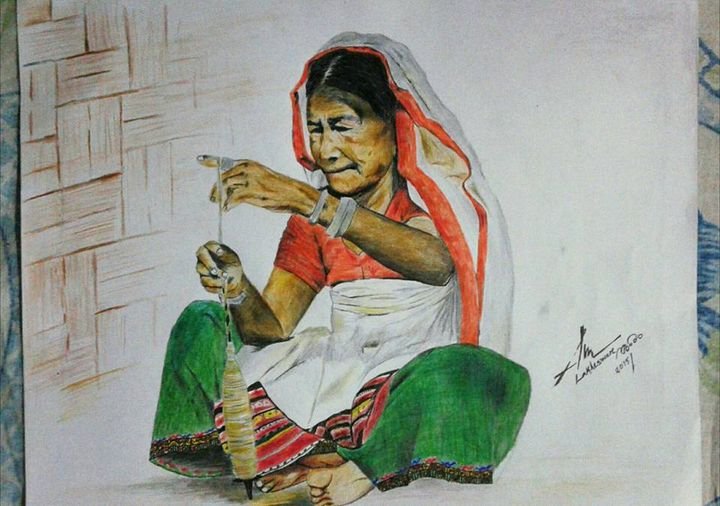
The picture of Disru is painted by Lakheswar Bodo Dishrudi Haflongbar, also known by her stage name Disru was one of the Dimasa princess. She was born on 3 March 1496, her father’s name is Hariram Haflongbar & mother’s name is Daokadi Haflongbar. While Disru also had a very important role play among the Dimasa communities it constituted … Read more

Why did Kabir wrote his poetry in Hindi? | Kabir Das – Dimasa Thairili

Kabir Das Among the devotees and poets of Hindi, whose speech is relevant even today, Sant Kabir Das Ji is the second highest. He composed poems useful to the public in the simple and comprehensible language of the masses by staying among the general public. In addition to devotional expressions in your poems, practical knowledge and humanistic … Read more

Baidima Dance | Dimasa Traditional Dance | Baidima Folk Dance of Assam – Traditional Folk Dances of India

 Baidima Dance


The Dimasa traditional dance

Baidima is a traditional folk dance of the Dimasa tribe. It is accepted as a traditional dance of the Dimasa and performed mainly harvesting festival during the Busu Dima. Baidima dances are performed by young boys and girls on the dance floor. The dancers wear traditional outfits and colorful ornaments. It is characterized by gradually dancing steps with the music, your hand on your waist and once up & down. In this traditional dance, songs are used; the name of the song is Nagasa Jaorere & Shivarai Baidima.

The meaning of Baidima, Bai means dance & Dima means Dimasa. Baidima dances are different kinds of dances, such as Baidima (Dima Hasao district), Baihawar (Cachar district), Baidembra (Hojai district) and the Dimasa people, who dance the Baidima of Dimapur are called Baidijuwa. Baimaijai or Baijaba (It means a cultural performance with a stone sieve once a time during Dimapur’s reign, so-called Baimaijai/Baijaba. This dance is performed in the Dimasa inhabited areas of Dima Hasao, Cachar, Hojai, Dimapur in Nagaland, and Karbi Anglong districts.

Read Also: Baimaijai The Another Dimasa Dance Form

Read more

Hamjaoma – Khasaoma | Dimasa poem | By Sourav Thousen

 THAIRILI Hamjaoma-Khasaoma Writer: Sourav Thousen Herening ahngkhe bamhi- malaorihi derikha dini elai, Bukhuha gidi graothai johi Jarni lengmakhe balaohi Khasaoba angkhe Magin bakhaolaiha Khudumhi, Buning ani mayani Amai. Khasaomani mudithai Magin mothaikhe hokhlaihi Serening angkhe denba jarni yaophaha thurihi Ang mudri thangba bubliha Khajalare ani mukhangkhe naidada Buning Ani mayani Amai. Mudi ruba ang jekhali … Read more

Masainjik Thairili by Sourav Thousen

Thairili  Masainjik By Sourav Thousen Shivarai Sangsaiba habsaoha masainjik Thilaphuya mithilaya masainjik kopal khe Brahni hathani masainjik thangmaidu Brahbaini hathani gadain ha Garhi thang maidu Boma-Bopha ni noh khe Jamaidu malaini Nogobrajik Jamaidu Boma. Bakhaliba maidu dukhu Bakhaliba maidu khajama Funudu hamba raji ke thangdaoba. Funudu hamba Nokhor khe thangdaoba Bisilai balaidu, bisilai khanathaodu Bisilai … Read more