Baimaijai dance: Know History and Significance of the Dimasa traditional dance
 The Dimasa Kachari tribe is one of the oldest tribe in Assam, India. The Dimasa folk dance is rich in variety, featuring different types of dances, one of which is the Baimaijai dance.

Baimaijai dance
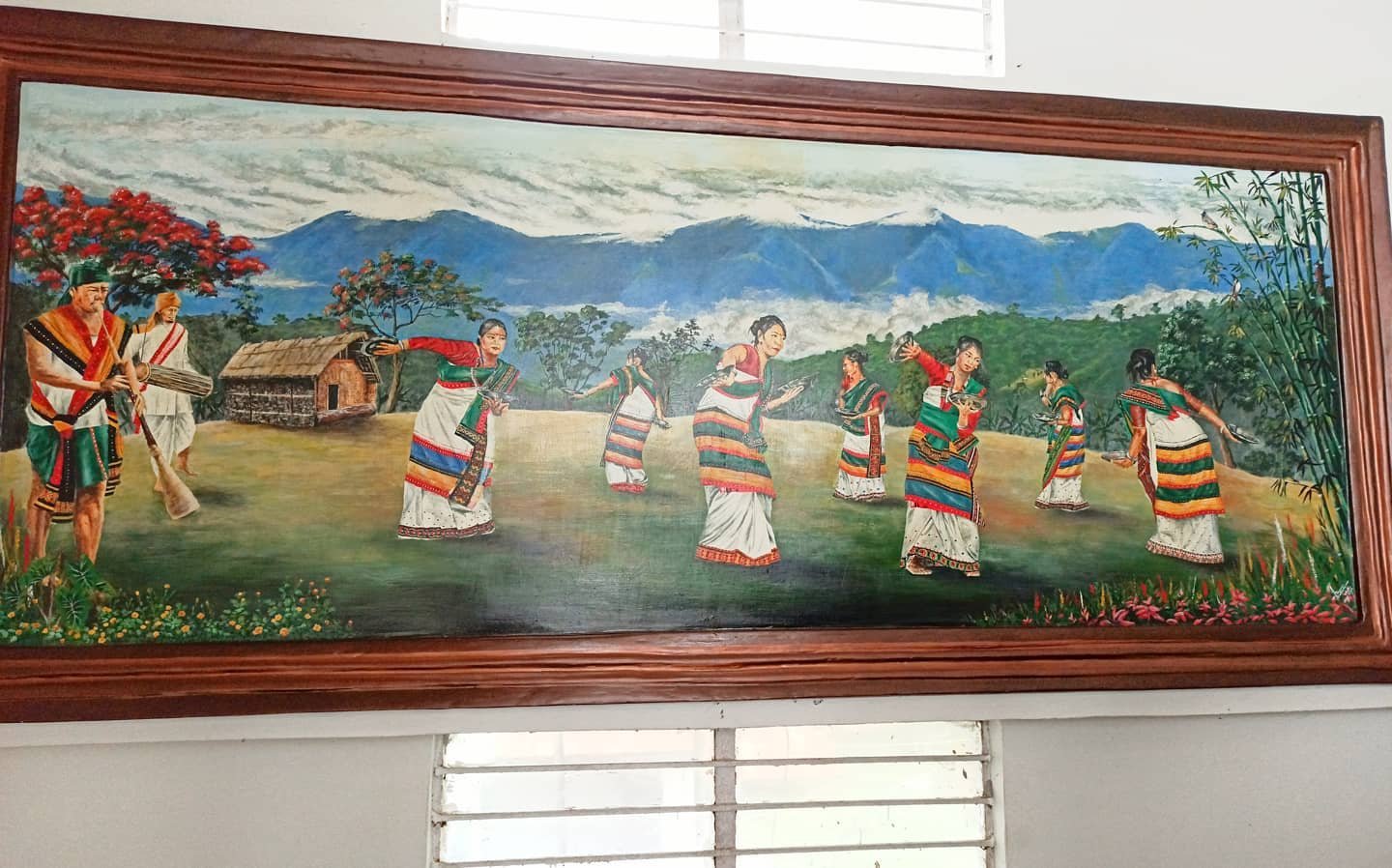
Baimaijai dance – (Art by Lakheswer Bodo)

Baimaijai is a traditional folk dance of the Dimasa.
The dance is performed by young girls or women with a Plate or a Dish, and they perform
the dance with two plates in both hands. This dance has a distinctly unique
feature. Historically, during the reign of the Dimasa kingdom, the king had come
out victorious in the war and offered victory at the Palace through delight.
The dance was also reportedly performed at that festival. The dance has gained
popularity ever since. The dance has now gained immense popularity in different
parts of India.


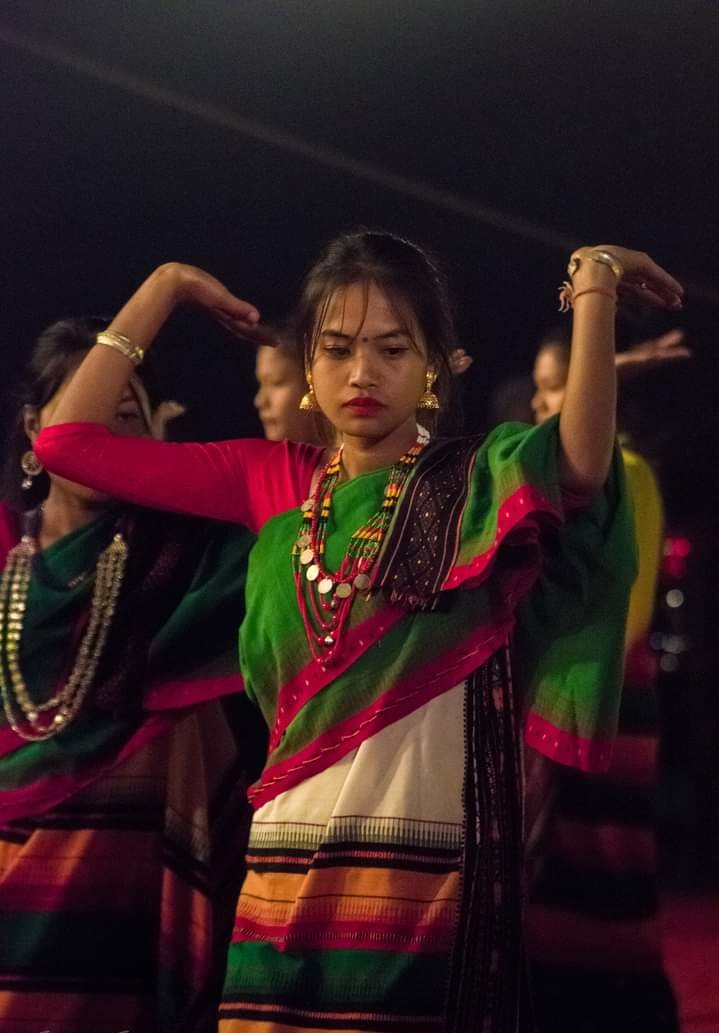
Dancers wear traditional outfits and ornaments like Rangbarsa (Necklace
made of coins), a drum-shaped ornament is worn on the neck, Chandrahal (Necklace
made of three silver chains with flower shapes), and Rikhaosa (Long muffler taken
by both men and women; white, green, or yellow), Rajamphain (White cloth worn from chest to knees), Rigu (Wrapper or lower garment of various colors,
worn from waist to ankle), etc. ornaments. They performed the dance with two plates
in both hands. The spirit of the song is expressed in the tunes of Kharam (Drums)
and Muri (Fife). 

Kharam and Muri(Musical instruments)
The Dimasa old men are playing Kharam and Muri.

The stunning outfit of the dancer, the ornaments, and the sparkling
sparkle of the dancing plate in hand give this dance a unique dimension. It is
truly commendable that the new generation is now devoted to retaining this
dance and has been able to give this dance a new look all over India.

Read more

Baidima Dance | Dimasa Traditional Dance | Baidima Folk Dance of Assam – Traditional Folk Dances of India

 Baidima Dance


The Dimasa traditional dance

Baidima is a traditional folk dance of the Dimasa tribe. It is accepted as a traditional dance of the Dimasa and performed mainly harvesting festival during the Busu Dima. Baidima dances are performed by young boys and girls on the dance floor. The dancers wear traditional outfits and colorful ornaments. It is characterized by gradually dancing steps with the music, your hand on your waist and once up & down. In this traditional dance, songs are used; the name of the song is Nagasa Jaorere & Shivarai Baidima.

The meaning of Baidima, Bai means dance & Dima means Dimasa. Baidima dances are different kinds of dances, such as Baidima (Dima Hasao district), Baihawar (Cachar district), Baidembra (Hojai district) and the Dimasa people, who dance the Baidima of Dimapur are called Baidijuwa. Baimaijai or Baijaba (It means a cultural performance with a stone sieve once a time during Dimapur’s reign, so-called Baimaijai/Baijaba. This dance is performed in the Dimasa inhabited areas of Dima Hasao, Cachar, Hojai, Dimapur in Nagaland, and Karbi Anglong districts.

Read Also: Baimaijai The Another Dimasa Dance Form

Read more