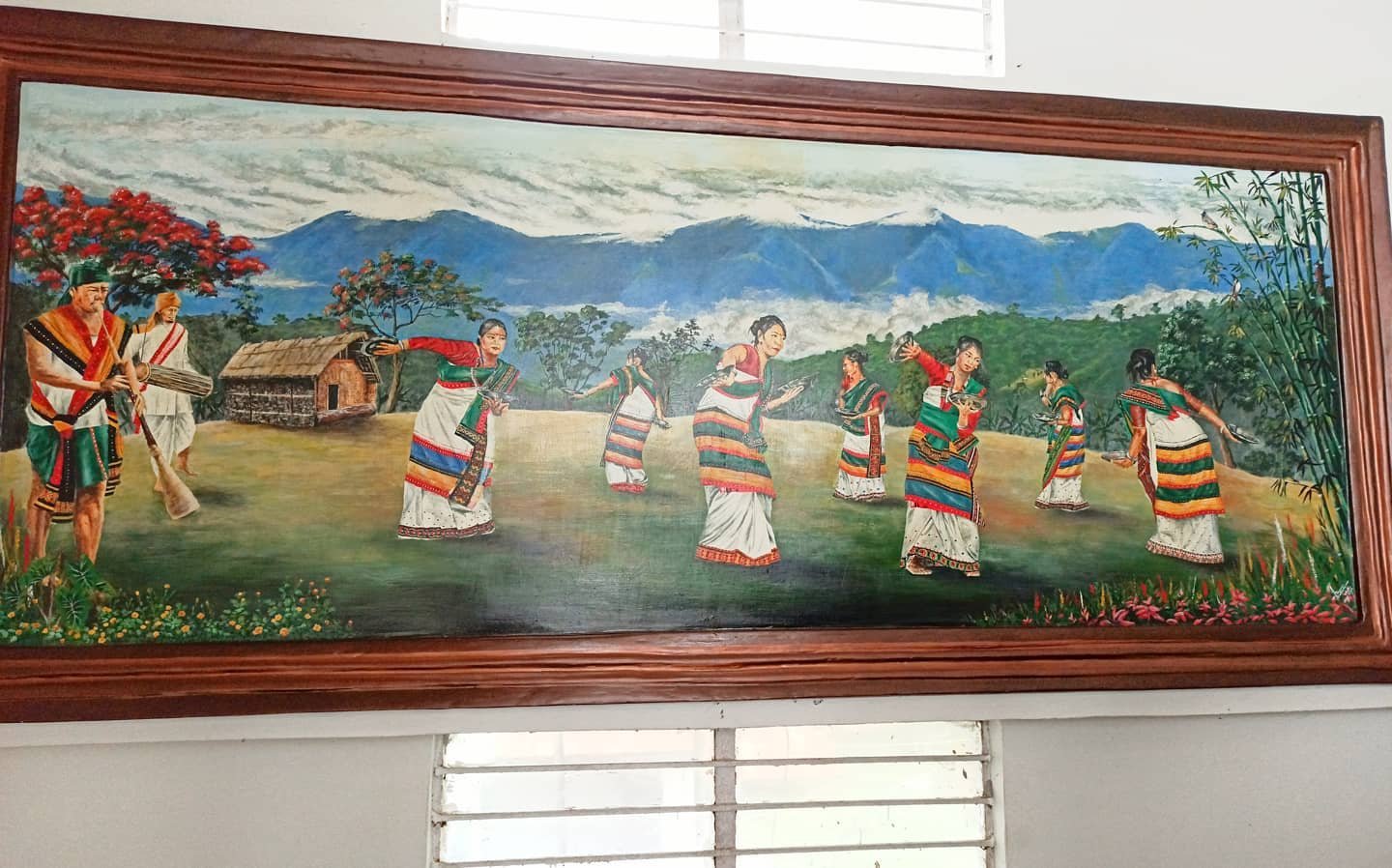
The Dimasa Kachari tribe is one of the oldest tribe in Assam, India. The Dimasa folk dance is rich in variety, featuring different types of dances, one of which is the Baimaijai dance.
 |
| Baimaijai dance – (Art by Lakheswer Bodo) |
Baimaijai is a traditional folk dance of the Dimasa.
The dance is performed by young girls or women with a Plate or a Dish, and they perform
the dance with two plates in both hands. This dance has a distinctly unique
feature. Historically, during the reign of the Dimasa kingdom, the king had come
out victorious in the war and offered victory at the Palace through delight.
The dance was also reportedly performed at that festival. The dance has gained
popularity ever since. The dance has now gained immense popularity in different
parts of India.
made of coins), a drum-shaped ornament is worn on the neck, Chandrahal (Necklace
made of three silver chains with flower shapes), and Rikhaosa (Long muffler taken
by both men and women; white, green, or yellow), Rajamphain (White cloth worn from chest to knees), Rigu (Wrapper or lower garment of various colors,
worn from waist to ankle), etc. ornaments. They performed the dance with two plates
in both hands. The spirit of the song is expressed in the tunes of Kharam (Drums)
and Muri (Fife).
 |
| The Dimasa old men are playing Kharam and Muri. |
sparkle of the dancing plate in hand give this dance a unique dimension. It is
truly commendable that the new generation is now devoted to retaining this
dance and has been able to give this dance a new look all over India.
FAQs on Dimasa Traditional Dance
Ans: Baimaijai is a traditional
folk dance of the Dimasa.
Q2. Which was the oldest tribe of
Assam?
Ans: The Dimasa Kachari tribe is
one of the oldest communities in Assam.
Q3. What is another name for the Baimaijai dance?
Ans: Another name for the Baimaijai dance is Baijaba.
Q4. What is Kharam?
Ans: Kharam is a Dimasa-language
word that is a drum.
Q5. What is Muri?
Ans: Muri is a Dimasa-language
word. Muri means fife musical instruments.
{
“@context”: “https://schema.org”,
“@type”: “FAQPage”,
“mainEntity”: [{
“@type”: “Question”,
“name”: “What is Baimaijai?”,
“acceptedAnswer”: {
“@type”: “Answer”,
“text”: “Baimaijai is a traditional folk dance of the Dimasa.”
}
},{
“@type”: “Question”,
“name”: “Which was the oldest tribe of Assam?”,
“acceptedAnswer”: {
“@type”: “Answer”,
“text”: “The Dimasa Kachari tribe is one of the oldest communities in Assam.”
}
},{
“@type”: “Question”,
“name”: “What is another name of the Baimaijai dance?”,
“acceptedAnswer”: {
“@type”: “Answer”,
“text”: “Another name of Baimaijai dance is called Baijaba.”
}
},{
“@type”: “Question”,
“name”: “What is Kharam?”,
“acceptedAnswer”: {
“@type”: “Answer”,
“text”: “Kharam is a Dimasa-language word that is a member of the percussion group of musical instruments, Drums.”
}
},{
“@type”: “Question”,
“name”: “What is Muri?”,
“acceptedAnswer”: {
“@type”: “Answer”,
“text”: “Muri is a Dimasa-language word. Muri means fife musical instruments.”
}
}]
}
{
“@context”: “https://schema.org”,
“@type”: “BlogPosting”,
“mainEntityOfPage”: {
“@type”: “WebPage”,
“@id”: “https://dimasathairili.blogspot.com/2021/09/baimaijai-dance.html”
},
“headline”: “Baimaijai dance: Know History and Significance of the Dimasa traditional dance”,
“description”: “Baimaijai is a traditional folk dance of the Dimasa. The dance is performed by young girls or women with Plate or Dish and they perform the dance with two plates in both hands.”,
“image”: [
“https://blogger.googleusercontent.com/img/b/R29vZ2xl/AVvXsEhYyAinTyqnBM_MjI2w7k90si3sBxn20Aa4WA_QlrNQ1BSC9edcB7VzUpGdG3sTvdGlJZjJ5jQCN8rKJfwCMZ-lxFq8gZD2dFJN8ns3mc5mcxeBQpqfUfEx5d4LsL1DsIjqW1vw-qYGayGy/w400-h249/Baimaijai+dance.jpg”,
“https://blogger.googleusercontent.com/img/b/R29vZ2xl/AVvXsEjZB6K_dieURe-Fb_ty_j1rDSMqSGe7Pb98htf_30Z7nVuJpwQYbUzR5oP3WfHei_mUyTntG8yrp13JjYfXQdbHi0PIH_NZv3mgGrZxLq9jZGkWHKAa23mdgtIwR9jWpucpZ-JynP2gEgWc/w400-h185/kharam-muri+instruments.jpg”
],
“author”: {
“@type”: “Person”,
“name”: “Shyamal Bodosa”,
“url”: “https://dimasathairili.blogspot.com/p/about-of-this-sites.html”
},
“publisher”: {
“@type”: “Organization”,
“name”: “https://dimasathairili.blogspot.com”,
“logo”: {
“@type”: “ImageObject”,
“url”: “https://dimasathairili.blogspot.com/favicon.ico”
}
},
“datePublished”: “2021-09-06”,
“dateModified”: “2021-09-08”
}