Judima is the most popular homemade rice beverage of the Dimasa tribe of North East India since immemorial times. Judima derives its name from Ju, which means wine, and Dima means Dimasa. Judima is prepared by fermentation using yeast cake made from rice mixed with plant barks (Thembra means Acacia
Pennata) containing different phytochemicals broadly described as phytoestrogens, terpenoids, carotenoids, limonoids, phytosterols, glucosinolates, polyphenols, flavonoids, isoflavonoids, and anthocyanidins. They
have a tremendous impact on the health care system and may invite medical health problems, including many diseases and physiological disorders. These phytochemicals may sometimes, either alone and/or in combination, have tremendous therapeutic potential also in curing various ailments.
Traditional Rice Wine Judima constitutes an integral part of the dietary culture of the Dimasa community. The Judima has a very strong alcoholic content as claimed by the tribe; the concentration needs to be assayed quantitatively. The biochemical analysis of the fermented rice beer Judima has been documented.
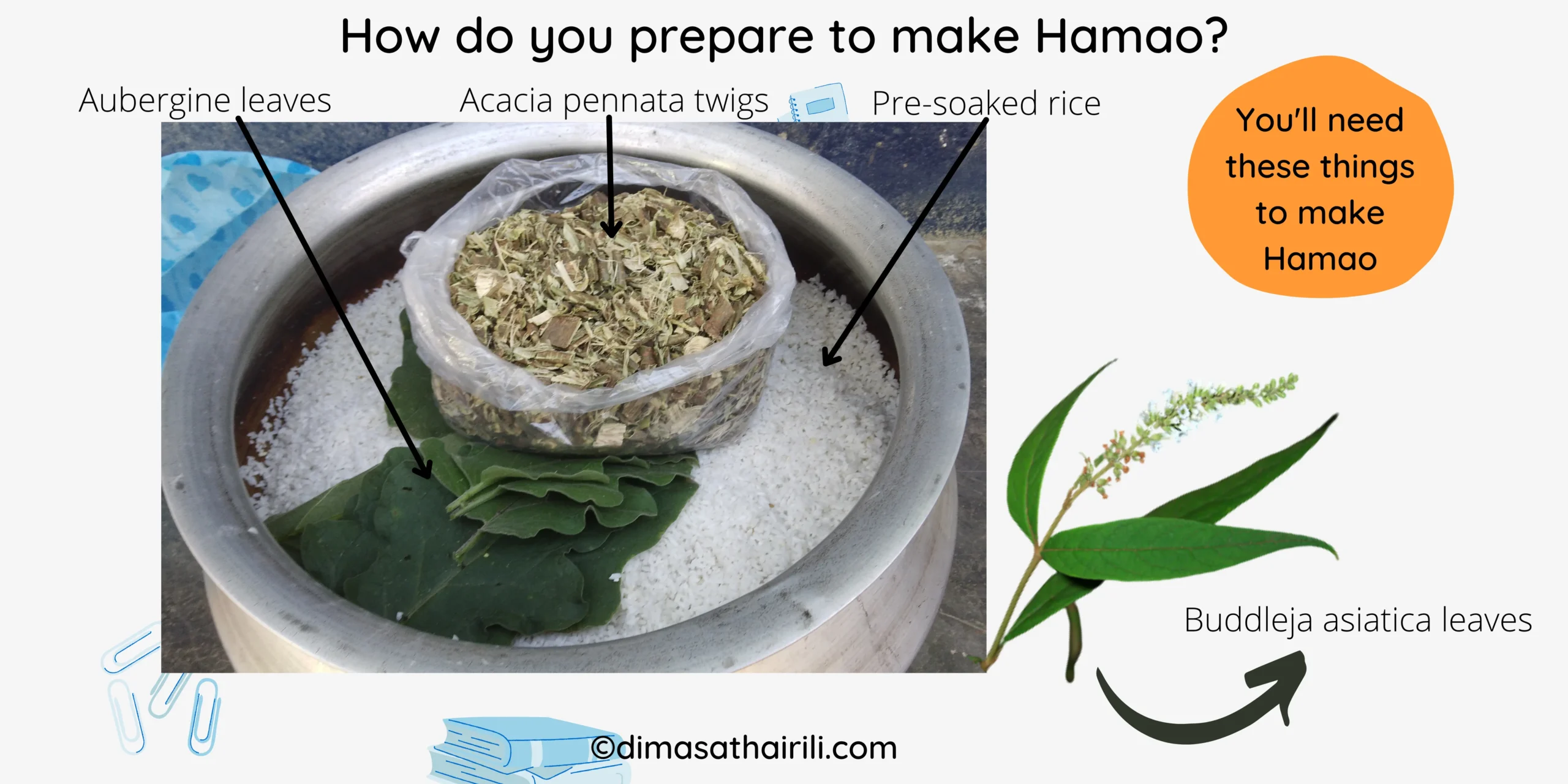
How do you prepare to make Humao or Hamao?
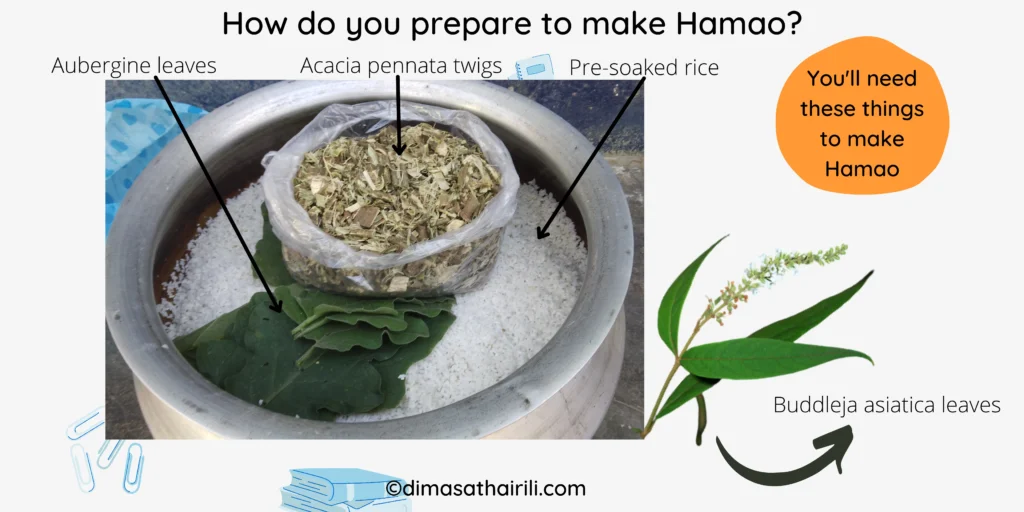
You’ll need these things to make Hamao: A sun-dried mixture of Thembra plant (Acacia pennata) twigs and pre-soaked rice. Buddleja Asiatica leaves are also added for variation in flavor and taste. The mixture of powdered Hamao is added, and small spheres are prepared. Each sphere weighs about 10 g. For Judima preparation, pre-boiled, cooled rice (roughly 1 kg) is mixed with one sphere of Hamao and kept in an airtight container. After 5-7 days, a yellow-colored juice comes out of the mixture, and it is called Judima.
Why are Judima & Juharo so important in Dimasa society?
Judima and Juharo are essential to solemnize their marriage and mourn the death ceremony. Traditionally, new married bride visits her parent’s house once a year; when she returns to her husband’s house, she should carry the Judima. The traditional festival Busu Dima of Dimasa is celebrated with freshly prepared Judima. In the death ceremony, freshly prepared Judima is offered to the dead and also to ancestors. Guests are also served with Judima. Without Judima, no celebration or religious ceremony is completed.
How many types of Rice Wine are in Dimasa society?
In Dimasa society, there are three types of traditional rice beer, namely;
- Judima
- Juharo
- Judi
Conclusion
Ju production is a home-based, unorganized industry practiced mainly by rural Diimasa women using their
native skills of alcohol fermentation, and some are economically dependent upon this product. The income earned is spent on children’s education and the purchase of essential commodities. It was observed during the survey that despite the popularity of these ethnic fermented foods and beverages of the Dimasa tribe of Assam, both from cultural as well as economic points of view, no efforts by the State Government or corporate sectors have been made to promote these ethnic foods and drinks. Even these culturally rich ethnic foods have not been included in any financial institutions, small cottage industries for employment generation, and food processing programs. We recommend that the ethnic fermented foods and alcoholic drinks of Dima Hasao of Assam should be included in the government’s food processing section to enhance the regional economy, generation of employment, and promotion of the age-old food culture of Assam in the global markets. The role of indigenous women in Dima Hasao of Assam in the production and marketing of ethnic fermented foods and beverages should be highlighted.
FAQs on Traditional Rice Wine Judima
Q1. How do you prepare to make Hamao?
Ans: A sun-dried mixture of Thembra plant (Acacia pennata) twigs and pre-soaked rice. Buddleja Asiatica leaves are also added for variation of flavor and taste. The mixture of powdered Hamao is added and small spheres are prepared.
Q2. Why are Judima & Juharo is so important in Dimasa society?
Ans: Judima and Juharo are essential for solemnizing marriage and mourning at death ceremonies. Traditionally, new married bride visits her parents’ house once a year, when she returns back to her husband’s house she should carry the Judima. The traditional festival ‘Busu Dima’ of Dimasa is celebrated with freshly prepared Judima. In the death ceremony, freshly prepared Judima is offered to dead persons and also to ancestors. Guests are also served with Judima. Without Judima no celebration or religious ceremony is completed.
Q3. How many types of Ju?
Ans: In Dimasa society, three types of Ju namely Judima, Juharo, and Judi.
Q4. Is Ju production an organized industry or an unorganized industry?
Ans: Ju production is a home-based, unorganized industry mostly practiced by rural Dimasa women using their native skills in alcohol fermentation, and some are economically dependent on this product. The income earned is spent on children’s education and the purchase of essential commodities.
Q5. What is the most famous wine from Assam?
Ans: Judima is the most famous traditional wine from Assam.