Nyishi Sentences Used in Daily Life | Nyishi to English Translation
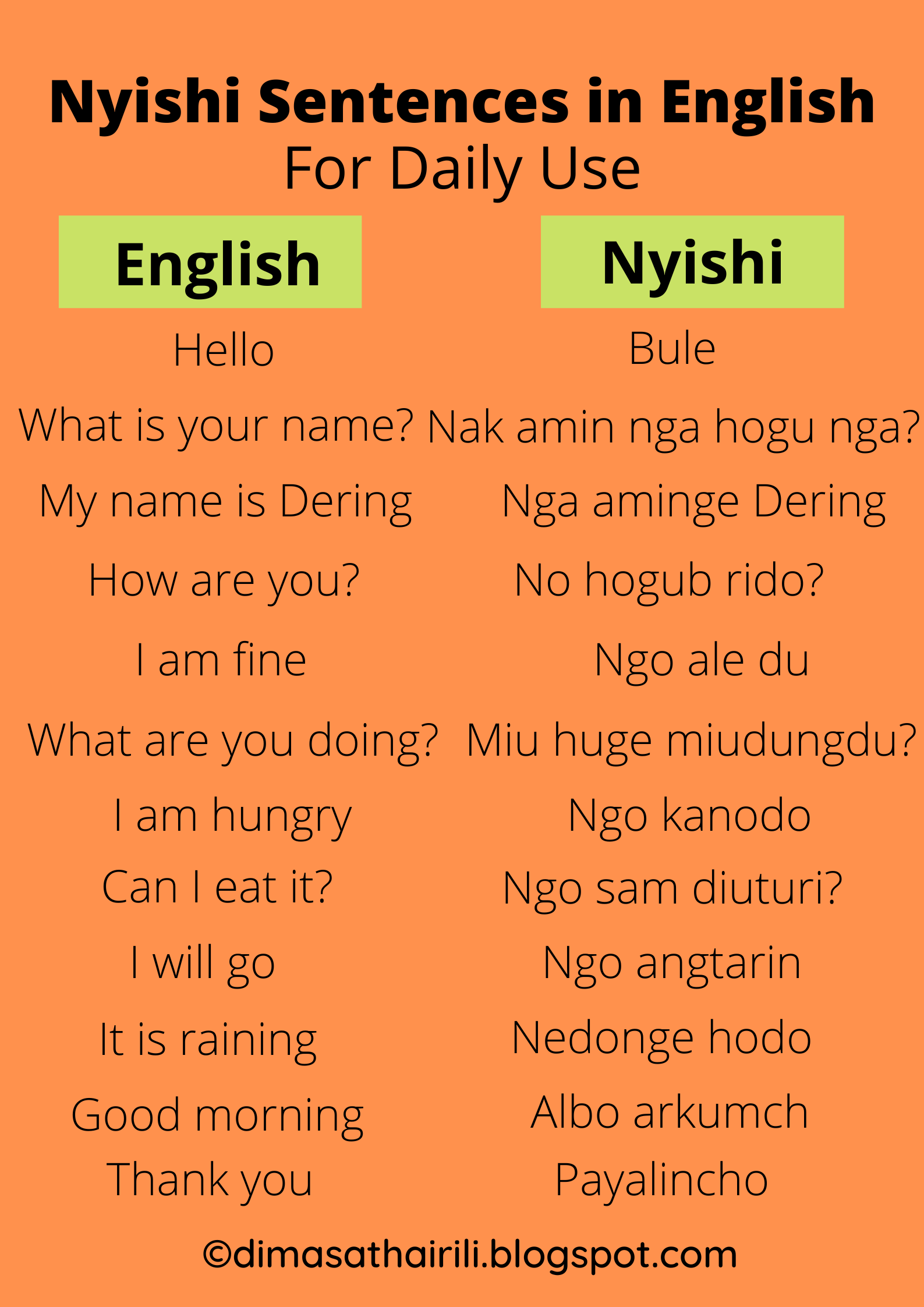
 Nyishi language belongs to the Sino-Tibetan language family spoken in the Northeastern Indian state of Arunachal Pradesh.  In this article, we will learn Nyishi-language words and phrases with pronunciation in English. So here I have collected daily used sentences in Nyishi. I know more than its sentences is needed but these sentences definitely help you. … Read more
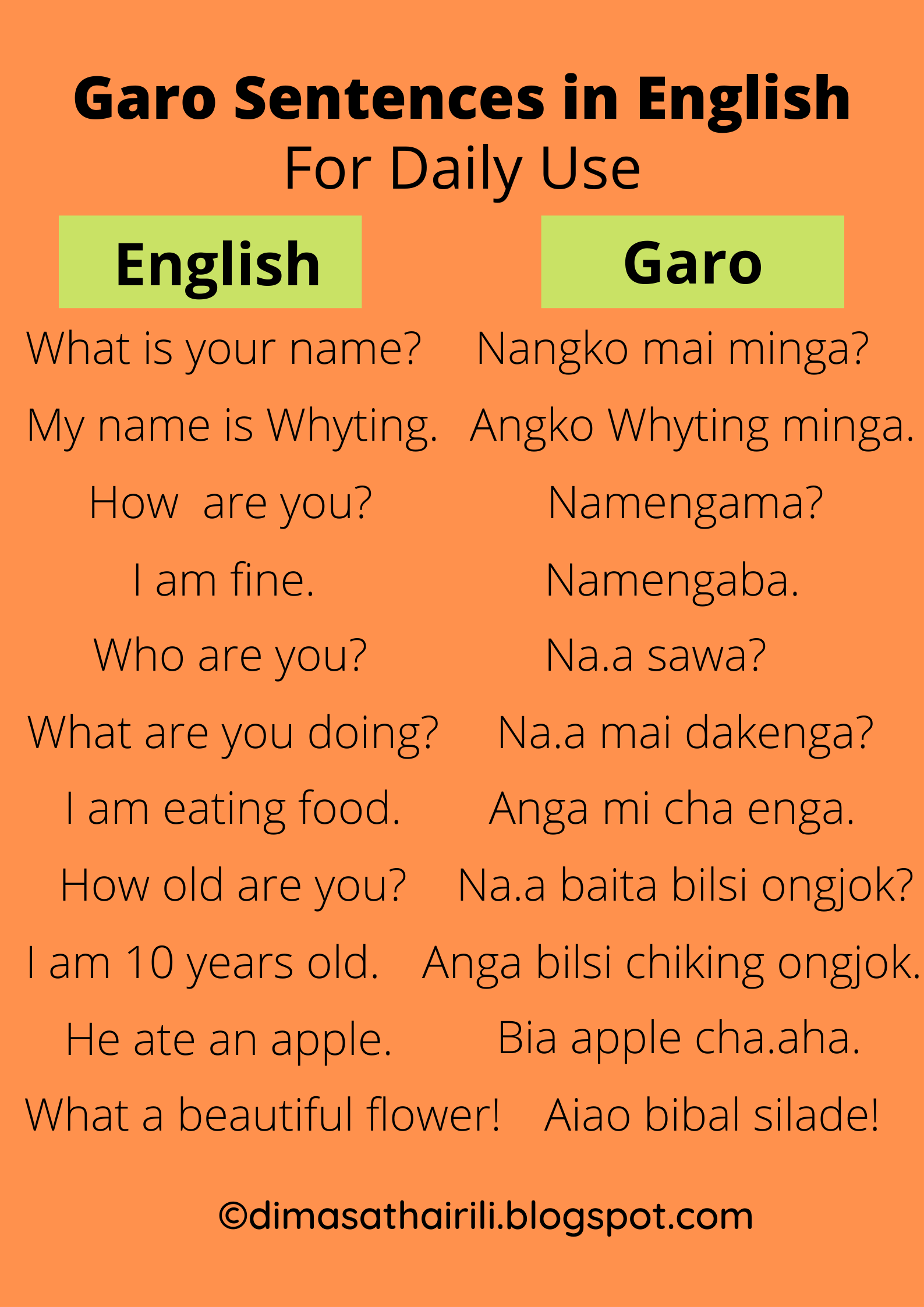
Garo Sentences Used in Daily Life | Garo to English Translation

 Garo language referred to as A·chikku, belongs to the Sino-Tibetan language family spoken in the Indian states of Meghalaya and Assam. Here we have adopted an objective and efficient approach to learning the Garo language easily with sentence meaning in English. Garo Grammar Book Example in Garo: Who are you? it’s mean – Na.a sawa? I am sorry. Angko kema ka⋅pabo. … Read more

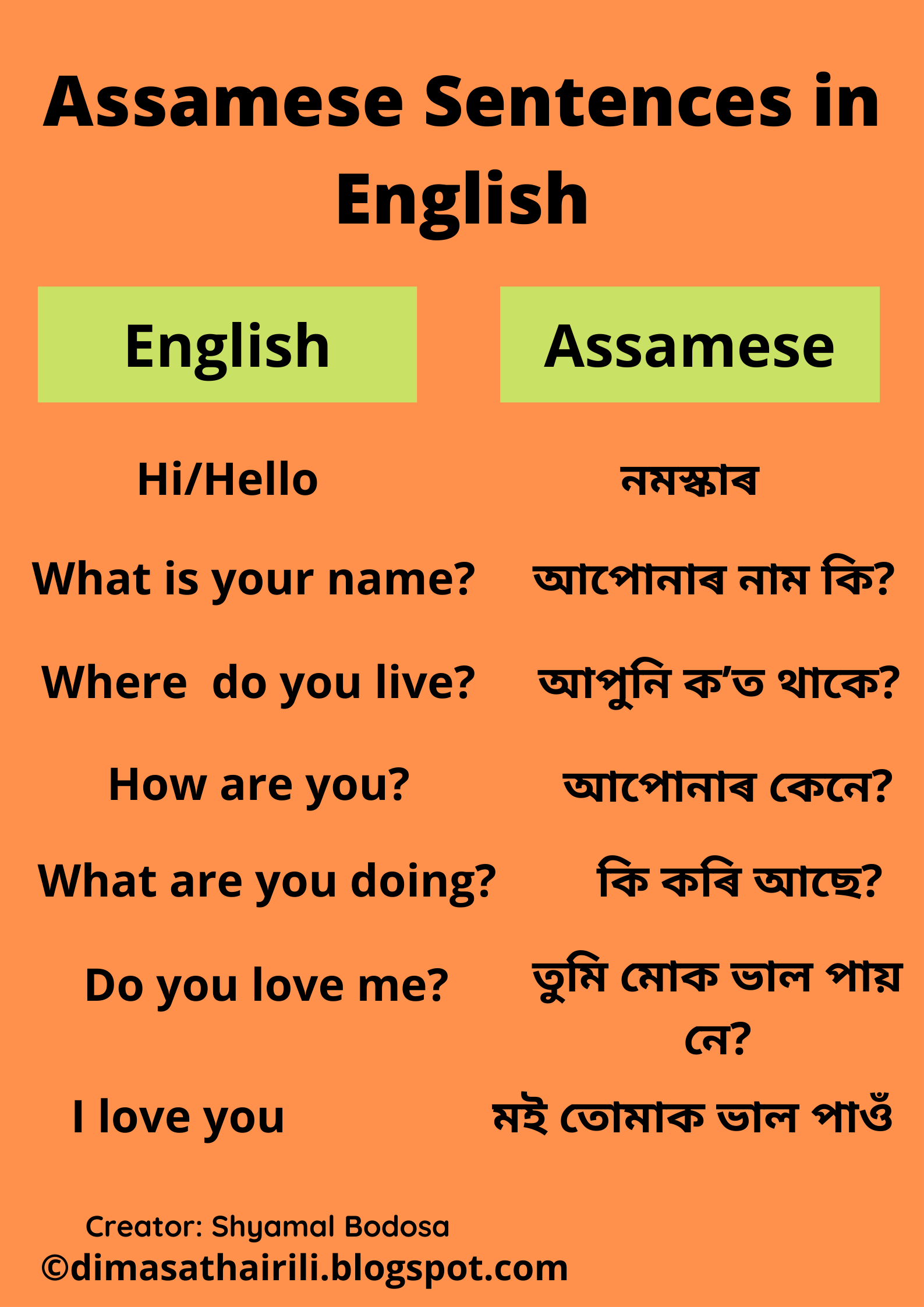
Assamese Sentences Used in Daily Life (English to Assamese)

Nomoskar! Today, in this lesson, we have collected your daily use Assamese sentences (অসমীয়া বাক্য) that you can use in your daily life. The Assamese language belongs to the Indo-Aryan language family spoken in the Indian state of Assam. As of the 2011 census, it has over 15 million speakers. Assamese Grammar on Amazon Assamese Sentences Used in Daily … Read more

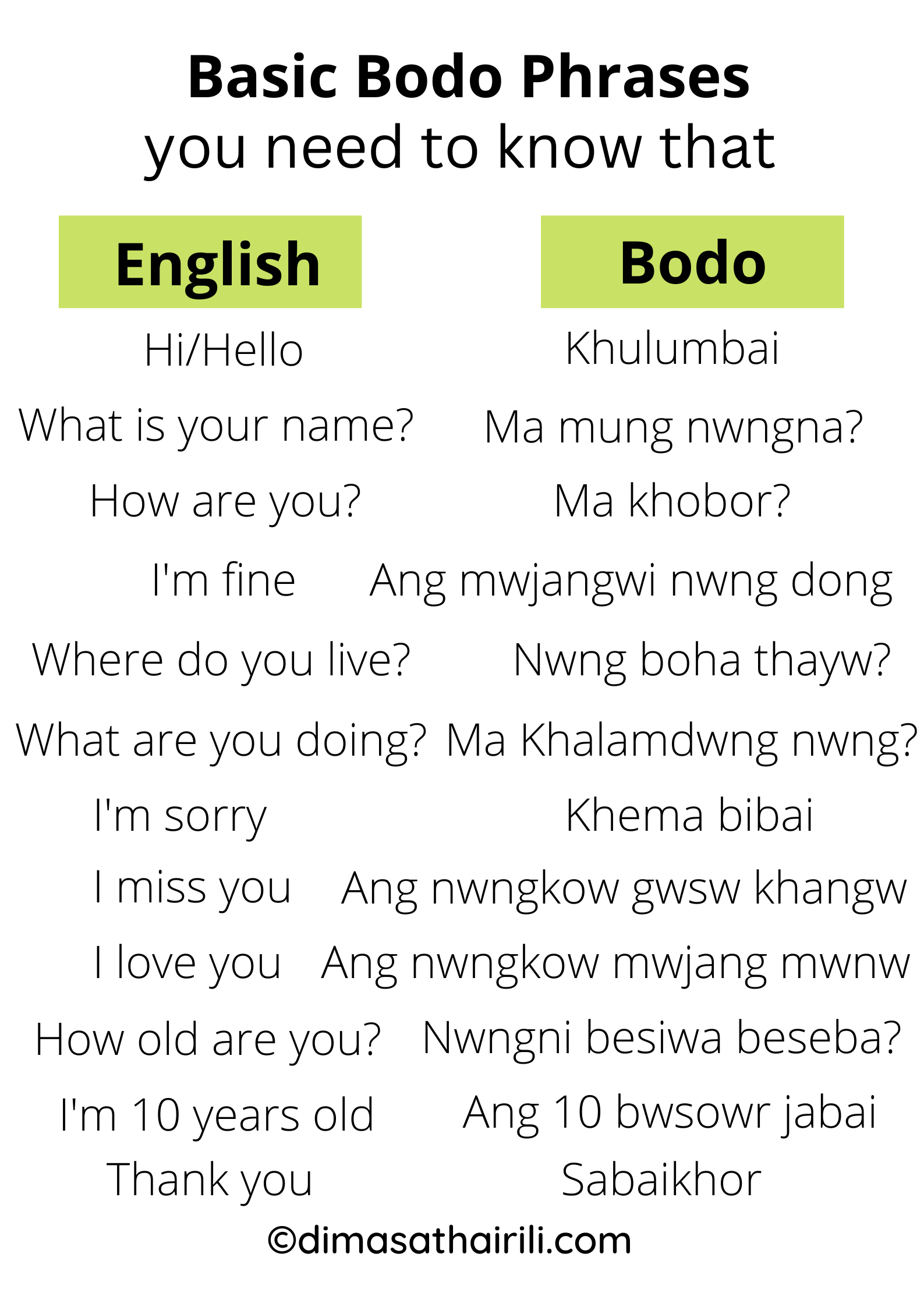
Learn Bodo Language Through English Online (English to Bodo)

 Bodo language (also called Boro) is one of the most prominent languages of Northeast India. Originally, the language belongs to the Sino-Tibetan language family. This language is closely related to the Dimasa, Kokborok, and Garo languages of Assam, Tripura, and Meghalaya. The Bodo language is one of the 22 languages recognized by the government of India … Read more

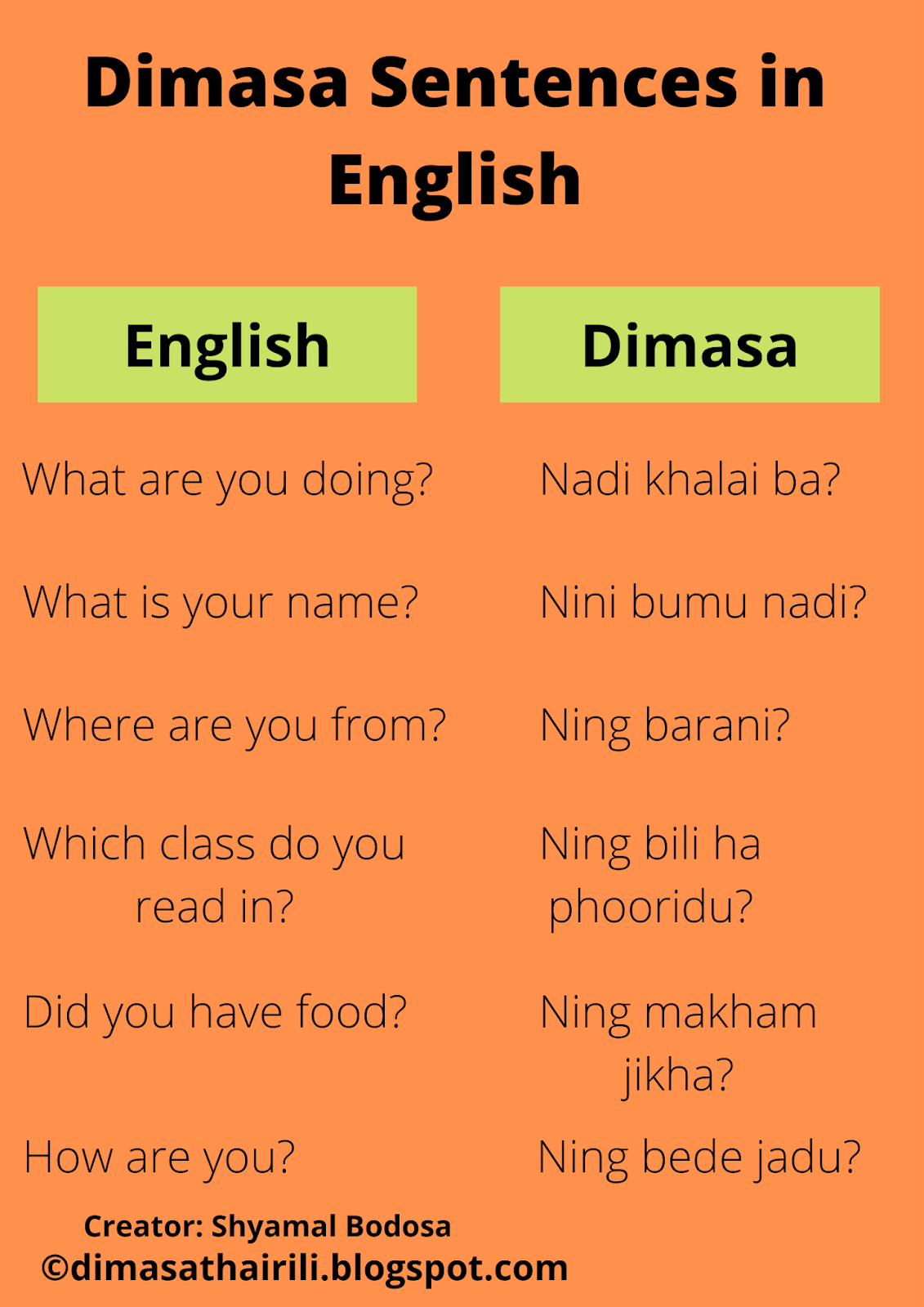
Dimasa Sentences Used in Daily Life | Dimasa to English Translation

 The Dimasa language (also known as Grao-Dima) belongs to the Sino-Tibetan language family and is spoken by the Dimasa people in the Northeastern Indian states of Assam and Nagaland. Today, in this lesson, we will learn basic Dimasa phrases and words along with their English pronunciation. Basically, we use S+V+O in English grammar, but in the … Read more